Treat your patients to a kinder, gentler
soft-tissue procedure,
with Cetacaine Topical Anesthetic Liquid.
Treat your patients to a kinder, gentler soft-tissue procedure,
with Cetacaine Topical
Anesthetic Liquid.
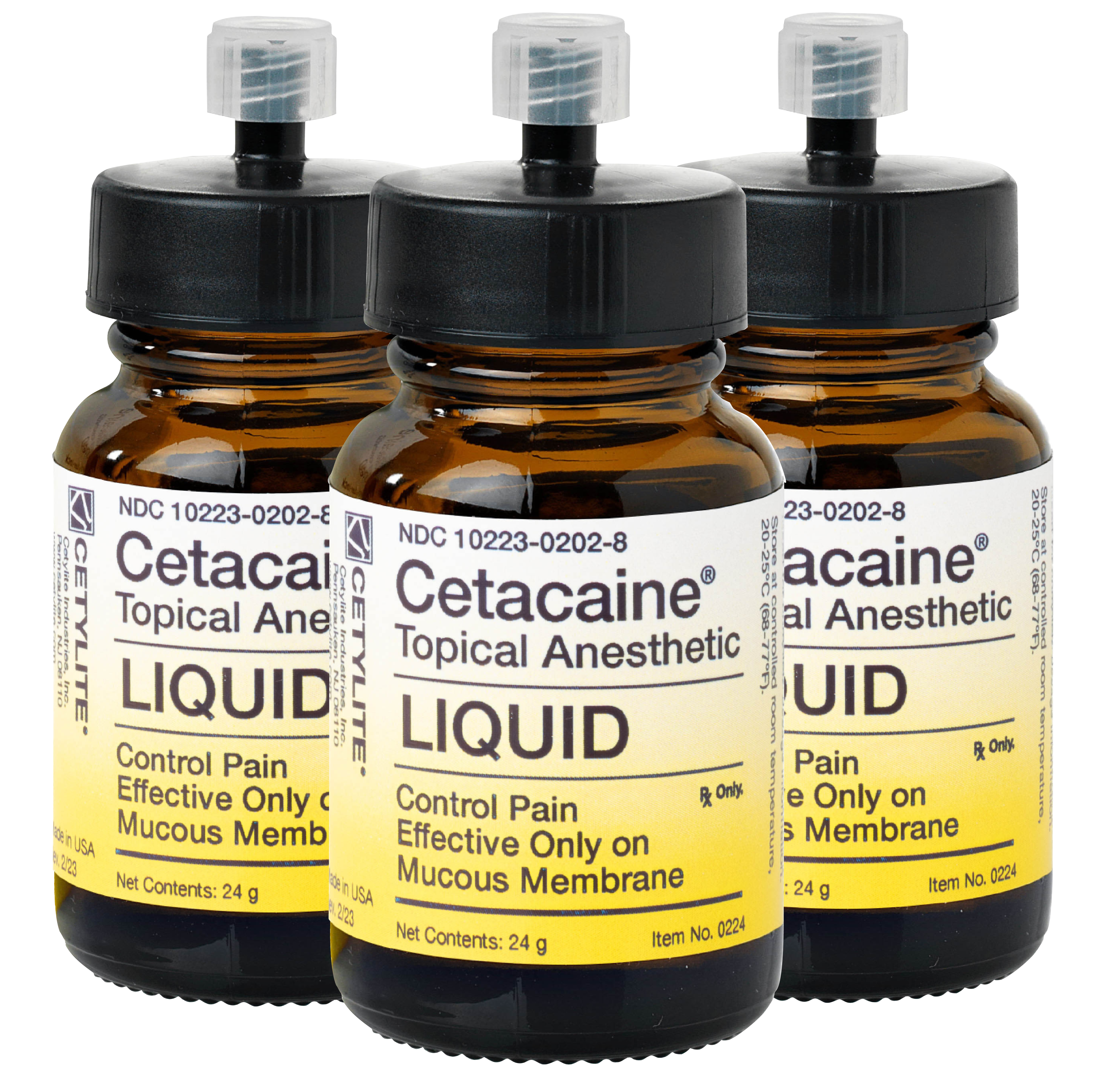

Cetacaine contains THREE active ingredients to keep your patients comfortable for up to 60 minutes.
Check out this video below to learn
about this unique formula of
benzocaine, butamben, and tetracaine HCL, found only in Cetacaine!

Take the guess work out of selecting a topical anesthetic for soft-tissue procedures
without an injection. Hear from real hygienists as they share why Cetacaine
is their preferred topical anesthetic for real results.
Prescription Cetacaine is proven more effective than OTC 20% benzocaine topical anesthetic.
Used and trusted for more than 50 years, it is the ideal anesthetic for most soft-tissue procedures,
including scaling and root planing. Cetacaine application is easy and painless for patients,
and its up to 60-minute duration matches the length of most hygiene procedures.
Plus, with no waste (you use exactly the amount you need) and a shelf life of two years,
the overall cost is lower than other topical anesthetic options.
1
Prescription Cetacaine is proven more effective than OTC 20% benzocaine topical anesthetic. Used and trusted for more than 50 years, it is the ideal anesthetic for most soft-tissue procedures, including scaling and root planing. Cetacaine application is easy and painless for patients, and its up to
60-minute duration matches the length of most hygiene procedures. Plus, with no waste (you use exactly the amount you need) and a shelf life of two years, the overall cost is lower than other topical anesthetic options.
Take the guess work out of selecting a topical anesthetic for soft-tissue procedures without an injection. Hear from real hygienists as they share why Cetacaine is their preferred topical anesthetic for real results.
1
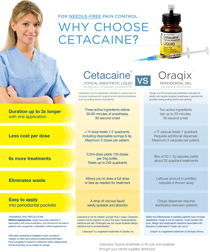
Cetacaine: There is no comparison
Unlike other topicals, Cetacaine has a long duration, keeping your patients comfortable for up to 60 minutes. The feather-light and precise syringe, unlike needles or a blunt-tipped application gun, makes application more pleasant and efficient. You will waste less and save time. Find out more reasons by downloading our comparison chart.
Cetacaine keeps your patients coming back for more.
"Patients show for their scaling and root planing appointments more often when they know Cetacaine is an option versus local anesthesia!
Adrienne Joiner, RDH
CLARKSVILLE, TN
Chelsey Wathen, RDH
“Cetacaine has been a lifesaver, especially for my anxious patients. People who have been postponing treatment just because they are scared of the shots are now compliant and some of my best patients! So much faster than waiting for local anesthetic to take affect too.”
YULEE, FL
Brief Summary of Prescribing Information
INDICATIONS: Cetacaine is a topical anesthetic indicated for use on all accessible mucous membrane where pain control is required, except the eyes.
WARNINGS/PRECAUTIONS:
Methemoglobinemia: Cases of methemoglobinemia have been reported in association with local anesthetic use. Do not exceed maximum dose. If a patient shows signs of methemoglobinemia, discontinue Cetacaine and any other oxidizing agents. Depending onthe severity of the symptoms, patients may respond to supportive care, i.e., oxygen therapy, hydration. More severe symptoms may require treatment with methylene blue, exchange transfusion, or hyperbaric oxygen.
ADVERSE REACTIONS: Adverse reactions, such as hypersensitivity, including anaphylaxis, are rare. Discontinue use if rash or allergic reactions develop. The most common adverse reaction caused by local anesthetics is contact dermatitis. Cetacaine should not be applied for prolonged periods except under continual supervision.
ADVERSE REACTIONS: Adverse reactions, such as hypersensitivity, including anaphylaxis, are rare. Discontinue use if rash or allergic reactions develop. The most common adverse reaction caused by local anesthetics is contact dermatitis. Cetacaine should not be applied for prolonged periods except under continual supervision.
PEDIATRIC/PREGNANCY/GERIATRIC: Safe use of Cetacaine during pregnancy has not been established and should not be used during early pregnancy unless a doctor determines the benefits outweigh the risks. An appropriate pediatric dose has not been established. Reduced dosage is recommended among elderly, acutely ill, and very young patients (i.e., children 2 years and older.)
CONTRAINDICATIONS: Do not use Cetacaine to treat infants or children younger than 2 years. Do not inject or use in the eyes. Cetacaine is contraindicated in patients who are hypersensitive to any of its ingredients or are known to have cholinesterase deficiencies. To avoid excessive absorption, Cetacaine should not be used under dentures or cotton rolls, as prolonged contact may cause an escharotic effect. Routine topical anesthetic precautions should be observed.
For complete prescribing information visit www.cetacaine.com.
PEDIATRIC/PREGNANCY/GERIATRIC: Safe use of Cetacaine during pregnancy has not been established and should not be used during early pregnancy unless a doctor determines the benefits outweigh the risks. An appropriate pediatric dose has not been established. Reduced dosage is recommended among elderly, acutely ill, and very young patients (i.e., children 2 years and older.)
CONTRAINDICATIONS: Do not use Cetacaine to treat infants or children younger than 2 years. Do not inject or use in the eyes. Cetacaine is contraindicated in patients who are hypersensitive to any of its ingredients or are known to have cholinesterase deficiencies. To avoid excessive absorption, Cetacaine should not be used under dentures or cotton rolls, as prolonged contact may cause an escharotic effect. Routine topical anesthetic precautions should be observed.
For complete prescribing information visit www.cetacaine.com.
Rx. For professional use only.
Reference:
Adriani J, Mehta D, Naraghi M. Mixtures of local anesthetics: The Effectiveness of Combinations of Benzocaine, Butamben, and Tetracaine Topically. Anesthesiology Review. 1981;12:15-19.
1
Made in USA
(14% benzocaine, 2% butamben, 2% tetracaine HCl)
Topical Anesthetic Liquid
DISCOVER THE DIFFERENCE OF
Cetacaine is available in Liquid, Gel, and Spray and can be purchased through
your preferred dental supplies distributor.
Cetacaine is available in Liquid, Gel, and Spray and can be purchased through your preferred dental supplies distributor.
Brief Summary of Prescribing Information
INDICATIONS: Cetacaine is a topical anesthetic indicated for use on all accessible mucous membrane where pain control is required, except the eyes.
WARNINGS/PRECAUTIONS:
Methemoglobinemia: Cases of methemoglobinemia have been reported in association with local anesthetic use. Do not exceed maximum dose. If a patient shows signs of methemoglobinemia, discontinue Cetacaine and any other oxidizing agents. Depending onthe severity of the symptoms, patients may respond to supportive care, i.e., oxygen therapy, hydration. More severe symptoms may require treatment with methylene blue, exchange transfusion, or hyperbaric oxygen.
ADVERSE REACTIONS: Adverse reactions, such as hypersensitivity, including anaphylaxis, are rare. Discontinue use if rash or allergic reactions develop. The most common adverse reaction caused by local anesthetics is contact dermatitis. Cetacaine should not be applied for prolonged periods except under continual supervision.
PEDIATRIC/PREGNANCY/GERIATRIC: Safe use of Cetacaine during pregnancy has not been established and should not be used during early pregnancy unless a doctor determines the benefits outweigh the risks. An appropriate pediatric dose has not been established. Reduced dosage is recommended among elderly, acutely ill, and very young patients (i.e., children 2 years and older.)
CONTRAINDICATIONS: Do not use Cetacaine to treat infants or children younger than 2 years. Do not inject or use in the eyes. Cetacaine is contraindicated in patients who are hypersensitive to any of its ingredients or are known to have cholinesterase deficiencies. To avoid excessive absorption, Cetacaine should not be used under dentures or cotton rolls, as prolonged contact may cause an escharotic effect. Routine topical anesthetic precautions should be observed.For complete prescribing information visit www.cetacaine.com.
Learn more about Cetacaine at Cetylite.com/Dental
Questions? Comments? We’d love to hear from you! Contact Us
For where to purchase: Authorized Distributors